Teaching with Vibe Coding: Learn Software Architecture by Inspecting AI-Generated Code
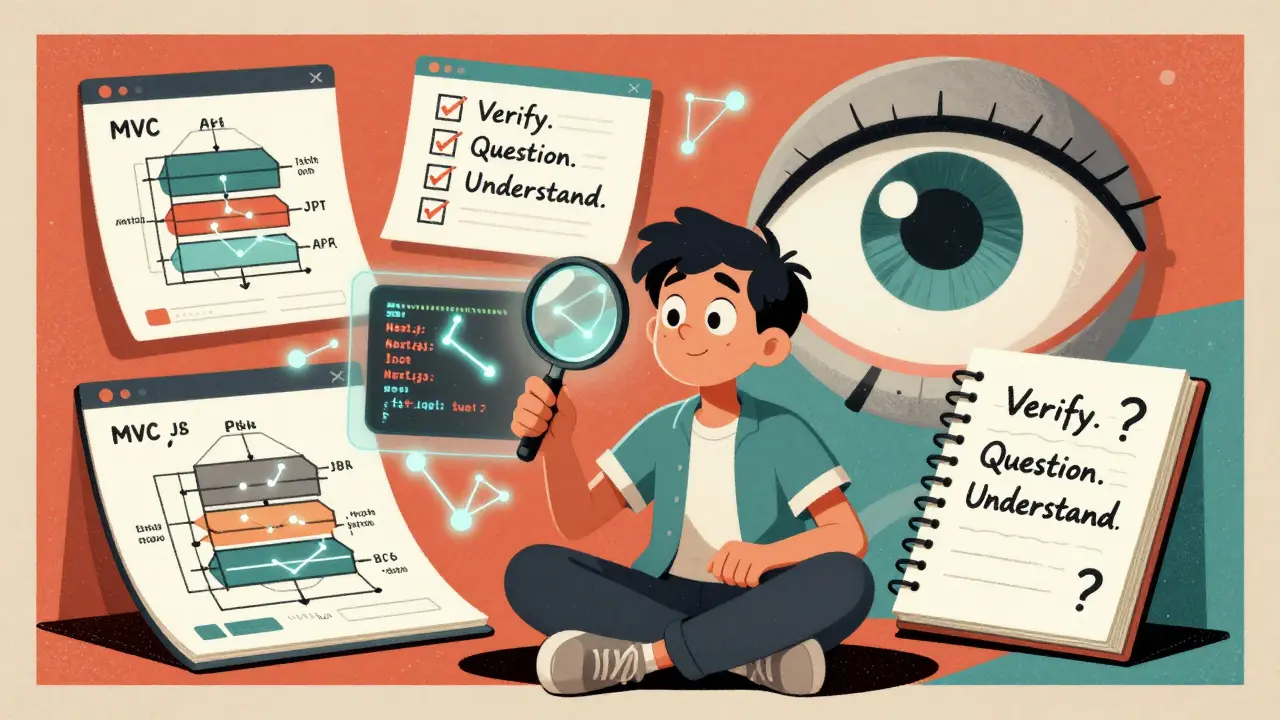
What if you could learn software architecture before you even wrote a single line of code? That’s the promise of vibe coding - a new way to teach programming that flips the script. Instead of starting with syntax, loops, and variables, students begin by examining real, AI-generated applications. They don’t build first. They inspect. They question. They understand the structure before they touch the keyboard.
Why Traditional Coding Classes Fall Short
For decades, computer science courses followed the same pattern: learn Python or Java, write simple programs, then - after months - maybe touch on architecture. By then, students had already built messy, tangled projects. A 2024 IEEE study found students in traditional programs had 27.3% more technical debt than those using vibe coding. Why? Because they were focused on making code run, not on how it was organized. Instructors noticed the same problem. A 2024 ACM survey showed 68.7% of teachers said students couldn’t explain why their code was structured a certain way. They could copy examples, but they couldn’t design. Pair programming helped a little, but only if students already knew enough syntax to talk about design. The gap between writing code and understanding architecture was too wide.What Is Vibe Coding?
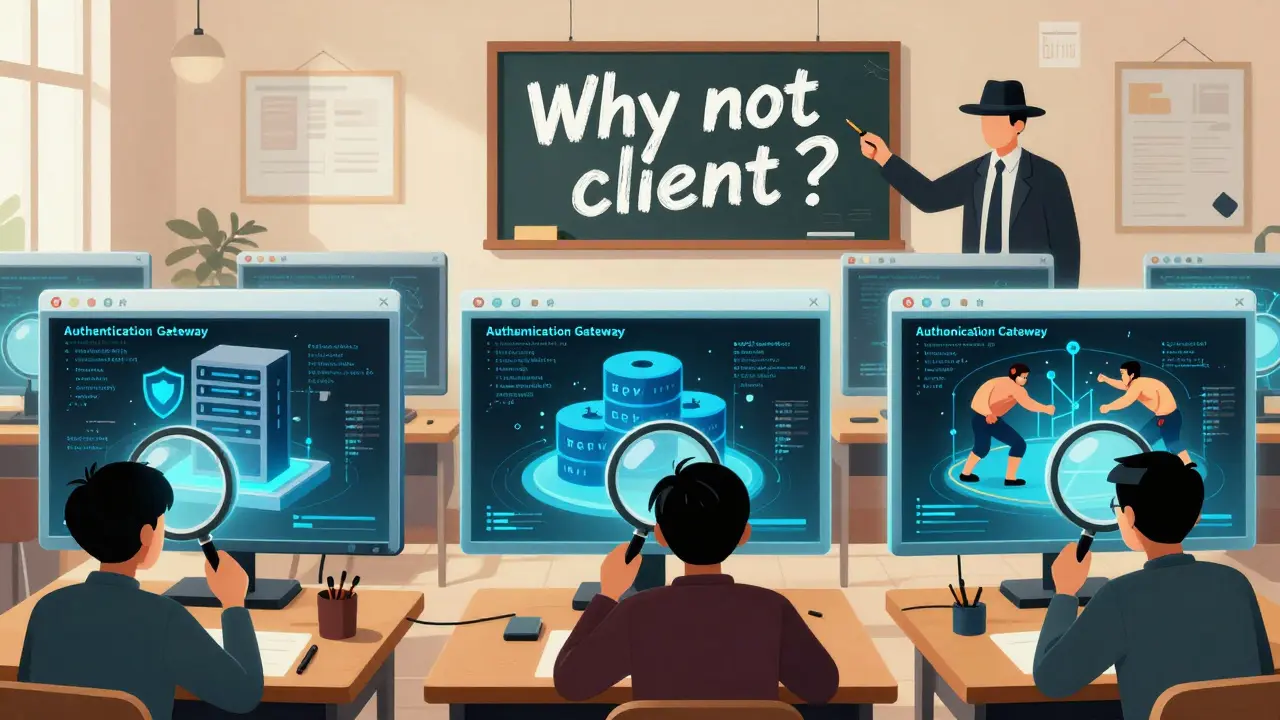
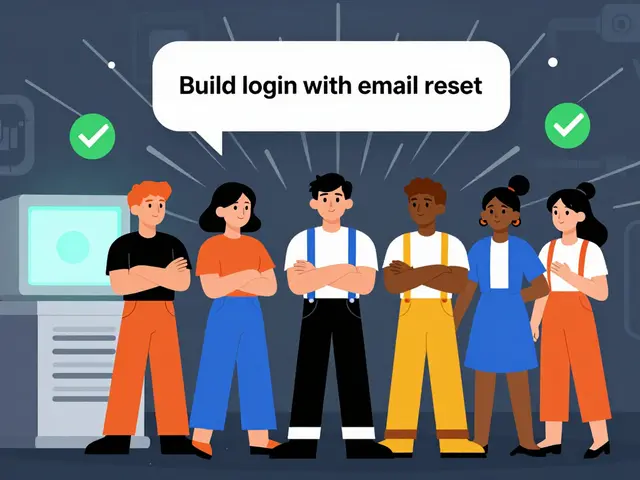
Vibe coding isn’t about letting AI write your code for you. It’s about using AI as a teaching tool - but only after you’ve learned to read it. The method comes from the Vibe Programming Framework, a set of educational guidelines developed in 2024 that require students to fully understand AI-generated code before modifying it. The core idea is simple: Verification Before Trust. Before you change a single line, you must explain what each part does, why it’s there, and what trade-offs it makes. For example, a student might prompt an AI: "Build a web app that lets users log in and view their profile." The AI generates a full Next.js app with authentication, API routes, and a database layer. The student doesn’t run it yet. They open the code and ask: Why is the login handled in a server component? Why not a client component? What’s the difference between JWT and session cookies here? Why did the AI choose PostgreSQL over SQLite? This isn’t passive reading. It’s active analysis. Students use tools like Google AI Studio, Replit, or Vibecode - platforms that show architectural diagrams alongside the code. In Vibecode’s mobile app, you can pinch to change a component and instantly see how the code updates. That visual feedback turns abstract concepts like MVC or microservices into something you can touch.How It Changes the Learning Curve
A 2024 University of Washington study found students using vibe coding understood architectural patterns 42% faster than those in traditional classes. One student, Maria Rodriguez, went from zero coding experience to building a full e-commerce app with proper routing, state management, and API integration in just eight weeks. The secret? She never wrote code until she could explain why the AI wrote it that way. Her instructor required her to answer five questions for every AI-generated file:- What is the purpose of this component?
- What alternatives did the AI consider?
- What performance trade-off is being made here?
- How would this break under load?
- How would you explain this to someone without a CS degree?
The Tools That Make It Work
You can’t do vibe coding without the right tools. Here’s what’s being used in classrooms today:| Platform | Key Feature for Architecture Learning | Cost (per student/year) |
|---|---|---|
| Google AI Studio | Architecture Lens - highlights design choices like API boundaries and data flow | Free for educators |
| Replit Edu | Verification checkpoints - blocks code edits until inspection is complete | $15 |
| Vibecode for Education | Pinch to Build - visual drag-and-drop changes that update code in real time | $20 |
Where It Falls Short
Vibe coding isn’t magic. Critics point out real risks. A 2024 IEEE SIGCSE report found that 57% of students initially became dependent on prompts. They’d say, "Make it faster," "Add security," "Fix the UI," and never ask why the AI chose one solution over another. They learned to prompt - not to think. At a community college in Ohio, a pilot program was paused after 61% of students couldn’t explain basic architecture without AI help. They’d say, "The AI did it, so it must be right." Without structured inspection, the method backfired. And it doesn’t work for everything. Teaching low-level systems programming - like memory management or kernel design - still needs traditional coding. You can’t learn how a CPU works by asking an AI to generate a C program. Vibe coding excels at modern full-stack apps (Next.js, React, Node.js), but not at embedded systems or real-time operating systems.
What Instructors Need to Know
Teachers aren’t just lecturers anymore. They’re code detectives. Professor Mark Thompson from the University of Texas said, "I spent six weeks relearning how to teach. I had to stop explaining architecture. I had to start asking questions about it." Instructors now need certification in the Vibe Programming Framework - a 40-hour course covering prompt engineering for education, inspection protocols, and how to assess true understanding. A 2024 Stanford study found teachers needed 6-8 weeks to get comfortable with the method. The biggest shift? Assessment. Instead of grading working code, you grade explanations. Did the student describe why the AI used a state machine? Did they compare two architectural options? Could they defend their changes? The Vibe Framework requires every modification to be tied to a learning objective. No more "I just thought it looked better." Every change must be documented with a reason: "Switched from REST to GraphQL to reduce 4 API calls per page load, improving load time by 210ms."Why This Is the Future
The job market is already shifting. LinkedIn’s 2024 report showed a 210% jump in job postings asking for "experience with AI-assisted development and code inspection." Amazon’s entire new-hire onboarding for architecture now uses vibe coding. Google, Microsoft, and Cloudflare all train their engineers this way. By 2026, Gartner predicts 80% of intro CS courses will use some form of AI code inspection. The ACM Education Board says this method could become the standard - with traditional syntax-first teaching reserved only for specialized courses. Why? Because companies don’t want coders who can type. They want engineers who can design. Vibe coding closes the gap between knowing how to write code and knowing how to build systems that last. It turns students from passive copy-pasters into active architects.What You Should Do Next
If you’re a student: Start with Google AI Studio. Ask the AI to build a simple app - a to-do list, a weather widget, a login page. Don’t run it. Open the code. Print it out. Circle every part you don’t understand. Then research it. Write down why each decision was made. Only then, make a change. If you’re a teacher: Don’t rush. Get certified. Use Replit’s verification checkpoints. Force your students to explain before they edit. Grade their reasoning, not their output. If you’re a developer: Try inspecting AI-generated code in your own projects. Before you accept it, ask: "Why did it choose this pattern? What’s the cost? What’s the alternative?" You’ll start seeing architecture everywhere. This isn’t about replacing learning. It’s about accelerating it. The code is generated. But understanding? That’s still yours to earn.Is vibe coding just using AI to write code for you?
No. Vibe coding is the opposite. It’s about pausing before you use AI-generated code. You inspect it, question it, and only then make changes. The goal isn’t to get code fast - it’s to understand architecture deeply. The AI is a teacher, not a crutch.
Do I need to know how to code before trying vibe coding?
No. In fact, many students start with zero experience. Vibe coding works because it skips syntax drills and goes straight to architecture. You learn how apps are built by looking at real examples - not by memorizing loops. You pick up syntax naturally as you explore why code works the way it does.
Can vibe coding replace traditional programming courses?
Not entirely. It’s excellent for teaching modern web and cloud architecture - things like React, APIs, and databases. But for low-level topics like memory allocation, compilers, or embedded systems, traditional coding practice is still necessary. Vibe coding complements, not replaces, the full curriculum.
Why do some students struggle with vibe coding?
Many students expect to just generate code and move on. Vibe coding requires patience. You have to sit with code you don’t understand, ask questions, and accept that you won’t get it right away. The frustration comes from shifting from "make it work" to "understand why it works." That mindset takes time to develop.
Is vibe coding used in real companies?
Yes. Amazon, Google, and Microsoft all use AI-assisted code inspection in their internal training. LinkedIn data shows job postings for this skill grew 210% in 2024. Companies don’t want developers who can prompt well - they want engineers who can evaluate, improve, and explain architecture.
What’s the biggest mistake students make with vibe coding?
Skipping the inspection phase. The moment students start saying, "The AI did it, so it’s fine," they lose the whole point. The power of vibe coding comes from active analysis - not passive acceptance. If you don’t question the code, you’re not learning architecture. You’re just getting faster at asking for things.






Vibe coding is just syntax-free architecture bootcamp. No fluff. Just ask why the AI chose this over that. Done.
There’s something almost poetic about learning architecture before syntax-like learning the symphony before the notes. The AI becomes a maestro, and we, the students, are finally listening instead of rushing to play. I’ve tried this with a simple login page, and honestly? It felt like decoding ancient code written by a ghost who knew exactly what it was doing. The trade-offs aren’t just technical-they’re philosophical.
It’s not about writing faster. It’s about thinking deeper. And that’s a rare gift in a world obsessed with velocity.
The empirical data presented in this article is compelling and aligns with recent pedagogical advancements in software engineering education. The 42% acceleration in architectural comprehension is statistically significant and corroborates findings from the 2024 ACM SIGCSE proceedings. Institutions adopting the Vibe Programming Framework must ensure rigorous assessment protocols are implemented to mitigate dependency risks. The certification requirement for instructors is not optional-it is foundational to the method’s integrity.
Furthermore, the integration of verification checkpoints in Replit Edu represents a paradigm shift in formative assessment. This model enforces metacognitive engagement, which is essential for long-term knowledge retention. I strongly recommend all academic departments transition to this framework by Q3 2025.
Let’s be real-this is just AI-worship dressed up as pedagogy. You’re teaching students to fetishize generated code instead of understanding the fundamentals. The moment you let an LLM dictate architectural decisions, you’re outsourcing critical thinking to a probabilistic text generator trained on GitHub dumps. And now we’re grading students on their ability to parrot back why the AI chose PostgreSQL? Please. This isn’t education-it’s algorithmic indoctrination.
What happens when the AI gets it wrong? When it uses a deprecated library? When it ignores security best practices? You think a student who’s never written a loop can spot that? They’ll just say, ‘The AI did it, so it’s fine.’ And then we’ll have another generation of engineers who don’t know what a stack frame is.
The article contains multiple grammatical inconsistencies particularly in the use of comma splices and inconsistent capitalization of proper nouns such as Vibecode and Google AI Studio. Additionally the phrase 'pinch to change' is not standard technical terminology and should be replaced with 'gesture-based component modification' for precision. The citation format for the 2024 IEEE study is also noncompliant with APA 7th edition. These errors undermine the credibility of an otherwise insightful methodology.
What if the real revolution isn’t in how we teach code-but in how we unlearn the idea that code is something you *make*? What if architecture is the soul of software, and syntax is just its breathing? We’ve spent decades training people to be typists for machines. Now we’re finally asking them to be philosophers of structure.
I sat with an AI-generated Next.js app for three days. Didn’t run it. Didn’t edit it. Just stared. And somewhere between questioning why the auth layer was server-side and wondering if the AI was afraid of client-side cookies… I felt something. Not understanding. Not mastery. But awe.
Maybe we’re not teaching programming anymore. Maybe we’re teaching reverence.
This is such a refreshing take! I’ve been teaching intro CS for five years and saw so many students burn out trying to memorize syntax before they even understood what a component was. Vibe coding flips that on its head-and it works. One of my students went from zero to building a full API-backed app in six weeks just by asking ‘why’ over and over. No panic. No cramming. Just curiosity.
Start small. Try it with a to-do list. Print the code. Circle the parts you don’t get. Look them up. Then tweak one thing. Document why. That’s it. You’re already thinking like an architect.
And hey-if you’re nervous, you’re doing it right. This isn’t about being perfect. It’s about being present with the code.
I tried this last month and it changed everything. I used to hate reading code-felt like homework. Now I treat it like a mystery novel. I print it out, scribble in the margins, and just sit with it. The AI doesn’t give me answers-it gives me questions. And that’s way more valuable.
Also, Vibecode’s pinch-to-build feature? Pure magic. I changed a button color and saw the whole component tree update. Suddenly, state management wasn’t abstract-it was tactile. I get it now.
This works if you’re patient. If you’re not you’ll just keep prompting until the AI gives you what you want. Then you’re back to square one. But if you slow down and actually look at the code? You’ll learn more in a week than in a whole semester of traditional classes. Just don’t rush it.
Of course this is being pushed by tech giants. They don’t want engineers who think-they want engineers who follow prompts. This isn’t education. It’s corporate onboarding disguised as innovation. They’re training a generation to be prompt engineers who can’t debug a null pointer without an AI. And when the LLMs fail? Who’s left holding the broken system? The students who never learned how to build from scratch.
Remember when we used to teach pointers? Memory allocation? Recursion? Now we teach students to ask the right questions to an algorithm that doesn’t even know what it’s doing. This isn’t progress. It’s surrender.