Vibe Coding Retrospectives: How to Fix AI Code Failures
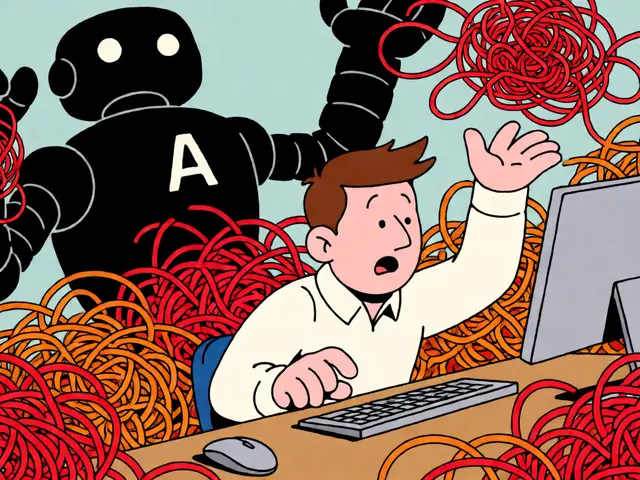
You type a vague instruction into your AI assistant. It spits out a block of code that looks perfect. You paste it into your project, hit run, and watch the application crash in ways you didn't expect. This is the dark side of Vibe Coding, a development paradigm where developers validate AI-generated implementations through outcome observation rather than line-by-line comprehension. It’s fast, it feels productive, but without a safety net, it creates technical debt faster than you can pay it off.
The problem isn't just that the code broke. The problem is that most teams treat these failures like normal bugs. They patch the error and move on. But AI output failures are different. They stem from gaps in prompt specificity, contextual misunderstandings, or validation blind spots. If you don't analyze *why* the AI failed, it will fail again tomorrow with a slightly different prompt.
This is where specialized retrospectives come in. Unlike traditional agile retrospectives that focus on team dynamics, Vibe Coding retrospectives dissect the human-AI interaction. They turn chaotic errors into structured data that improves your future prompts and protects your codebase's maintainability.
Why Standard Retrospectives Fail for AI Code
If you’ve been doing Scrum for years, you know the drill: What went well? What went wrong? How do we improve? This works great when humans write all the code. But when an LLM generates 80% of your logic, this format misses the root cause.
In traditional development, a bug usually means a logic error or a typo by a developer. In Vibe Coding, the "developer" is a probabilistic model interpreting natural language. According to data from the Vibecoding Alliance, 47% of AI output failures are caused by inadequate prompt specificity. Another 29% stem from contextual understanding gaps. Traditional retrospectives rarely dig deep enough to identify these nuances. They label everything as "communication breakdown," which is too vague to fix.
Without specific analysis, you’re flying blind. You might blame the AI model, when the real issue was that you forgot to specify the date format in your prompt. Or you might blame yourself for not testing enough, when the AI actually hallucinated a library function that doesn’t exist. Specialized retrospectives separate these issues so you can address them directly.
The Core Components of a Vibe Coding Retrospective
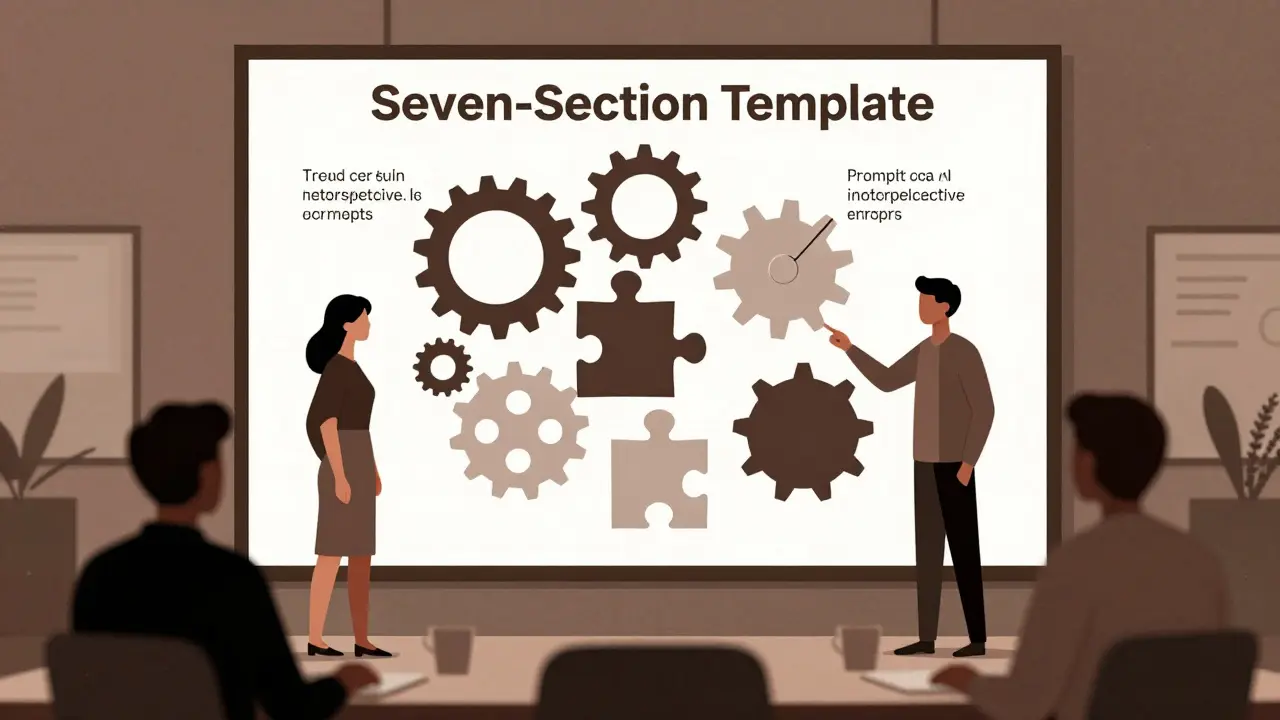
To make these sessions effective, you need a structure that captures the unique nature of AI interactions. The Supervised Vibe Coding Methodology recommends a seven-section template. Here’s what needs to be in there:
- Prompt Reconstruction: Recreate the exact prompt used. Did you provide enough context? Were constraints clear?
- Error Classification: Categorize the failure using a standard taxonomy (more on this below).
- Validation Gap Analysis: Why did your testing miss this? Was the output plausible but wrong?
- Human Oversight Effectiveness: Did the reviewer spot red flags? Was the review superficial?
- Contextual Understanding Assessment: Did the AI misunderstand the business logic or domain rules?
- Corrective Action Plan: Specific steps to prevent recurrence, such as updating prompt templates.
- Process Improvement Metrics: Quantifiable goals, like reducing clarification requests by 10%.
This structure forces the team to look beyond the code and examine the process of generation. It shifts the focus from "fixing the bug" to "improving the collaboration."
Classifying AI Failure Patterns
One of the biggest hurdles in learning from AI failures is inconsistency. One day you call it a "hallucination," the next day it's a "logic error." To build organizational memory, you need a common language. The Vibecoding Alliance has documented 12 common failure types. While you don’t need to memorize all of them, recognizing the top categories helps:
| Failure Type | Description | Typical Root Cause |
|---|---|---|
| Inadequate Prompt Specificity | AI produces correct syntax but wrong logic due to vague instructions. | Missing constraints or edge cases in the prompt. |
| Contextual Understanding Gaps | AI ignores existing codebase conventions or business rules. | Lack of relevant context provided in the conversation history. |
| Validation Process Weaknesses | Output passes initial checks but fails in production. | Insufficient test coverage for AI-generated paths. |
| Model Limitations | AI cannot solve the problem due to inherent capability limits. | Problem complexity exceeds current model reasoning ability. |
By tagging each failure with one of these categories, you start seeing patterns. Maybe your team consistently struggles with Contextual Understanding Gaps. That’s a signal to invest in better context management tools or to train developers on how to feed background information to the AI.
Timing and Frequency: When to Hold These Sessions
Timing matters. If you wait two weeks to discuss an AI failure, the details fade. The Supervised Vibe Coding Methodology suggests holding retrospectives within 24 hours of incident identification, with analysis completed within 48 hours. This keeps the memory fresh and ensures that the prompt reconstruction is accurate.
But don’t overdo it. High-velocity teams might face 5-10 AI output failures per developer per week. Holding a full retrospective for every minor glitch leads to fatigue. Instead, use a tiered approach:
- Minor Failures: Quick log entry. Tag the error type and note the fix. No meeting needed.
- Moderate Failures: Pair discussion. Two developers spend 15 minutes reviewing the prompt and the error. Update the shared knowledge base.
- Major Incidents: Full retrospective. Use the seven-section template. Involve the whole team if the failure impacted production.
This balance ensures you capture valuable insights without slowing down development. The goal is continuous improvement, not bureaucratic overhead.
Building Organizational Memory
The real value of Vibe Coding retrospectives isn’t just fixing the current bug. It’s preventing future ones. Dr. Elena Rodriguez from Stanford University notes that effective retrospectives systematically catalog AI failure patterns. This creates an organizational memory that new team members can tap into.
How do you build this memory? Start with a centralized repository. Tools like GitHub Copilot Enterprise’s 'AI Incident Analyzer' or custom dashboards can store prompt-response pairs along with their outcomes. Over time, this data becomes gold. You can search for past failures similar to your current challenge and see how others resolved them.
For example, if a developer encounters a financial calculation error, they can check the repository. They might find that three months ago, another team faced the same issue because the AI misinterpreted currency rounding rules. The solution? Add a specific constraint about decimal precision to the prompt. Problem solved in minutes, not hours.

Overcoming Resistance and Challenges
Not everyone will love this idea. Some developers resist structured retrospectives, arguing that they just want to fix the code and move on. Others fear that these sessions will become blame games, pointing fingers at whoever wrote the "bad" prompt.
To overcome this, frame retrospectives as learning opportunities, not accountability exercises. Emphasize that AI failures are often systemic, not individual. A vague prompt might seem like a personal mistake, but it could also indicate that the team lacks clear guidelines for interacting with the AI.
Also, ensure that action items have named owners. Teams with assigned responsibilities for implementing changes achieve an 89% completion rate, compared to 43% without. When people see concrete improvements resulting from their input, engagement increases.
Future Trends: From Reactive to Proactive
The landscape of AI-assisted development is evolving rapidly. By 2027, Gartner predicts that 85% of organizations will implement specialized retrospective frameworks. We’re already seeing tools like 'VibeInsight' launch in early 2026, offering real-time analytics on prompt effectiveness. These tools analyze historical retrospective data to predict potential failures before they happen.
Moreover, companies like Google are integrating retrospective findings directly into AI training pipelines. Project Reflex uses this data to fine-tune internal models, reducing specific failure patterns by up to 74%. This means that your retrospective efforts don’t just help your team; they contribute to making AI models smarter for everyone.
As we move forward, the distinction between traditional code reviews and AI output validations will blur. The key is to stay adaptable. Keep refining your retrospective processes, listen to your team’s feedback, and always prioritize clarity in your prompts. The goal isn’t to eliminate AI failures entirely-that’s impossible-but to manage them intelligently so they become stepping stones rather than stumbling blocks.
What is the difference between a traditional agile retrospective and a Vibe Coding retrospective?
Traditional agile retrospectives focus on team dynamics, communication, and process bottlenecks among human developers. Vibe Coding retrospectives specifically analyze the interaction between humans and AI, focusing on prompt effectiveness, AI error patterns, and validation gaps. They aim to improve the quality of AI-generated code and the efficiency of the human-AI collaboration workflow.
How often should we hold Vibe Coding retrospectives?
The frequency depends on the severity of the failure. For major incidents impacting production, hold a full retrospective within 24-48 hours. For moderate issues, a quick pair discussion suffices. Minor failures should be logged but don't require a meeting. Avoid holding full retrospectives for every small error to prevent team fatigue.
What are the most common causes of AI output failures in Vibe Coding?
According to the Vibecoding Alliance, the leading cause is inadequate prompt specificity (47%), followed by contextual understanding gaps (29%), validation process weaknesses (15%), and inherent AI model limitations (9%). Identifying these specific causes helps teams target their improvements effectively.
Can Vibe Coding retrospectives improve long-term maintainability?
Yes. By systematically analyzing failures and building organizational memory around prompt engineering and validation strategies, teams reduce recurring errors. This leads to cleaner, more predictable codebases. Structured practices have been shown to reduce AI output failure rates by up to 58% over six months, significantly enhancing maintainability.
What tools can help facilitate Vibe Coding retrospectives?
Tools like GitHub Copilot Enterprise's 'AI Incident Analyzer', VibeInsight for real-time analytics, and open-source templates from the Vibecoding Alliance repository can help. These tools assist in logging prompts, categorizing errors, and tracking trends over time, making the retrospective process more efficient and data-driven.